This is a demo store. No orders will be fulfilled.




Filters
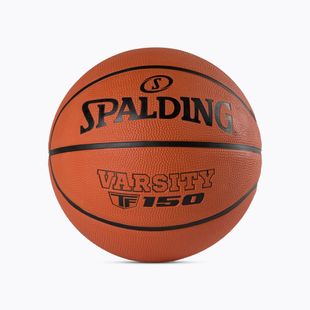 Extra -15% with the code CLUBSpalding TF-150 Varsity basketball 84326Z€16.99€14.44Lowest price: €12.74
Basketballs – how to choose a model for play and training?
Basketballs differ in size, outer material and intended use for indoor or outdoor surfaces, so it’s worth starting the selection by determining the training location and the user’s age. A well-chosen basketball should provide a secure grip, predictable bounce, comfortable handling, control during passes, the right size, appropriate weight, a durable surface, well-defined channels, stable shape retention and properties matched to the surface. A basketball intended primarily for a wooden court may have a different surface feel than a model used on asphalt or concrete. It’s therefore worth choosing basketballs according to the manufacturer’s recommendations for indoor, outdoor or universal use. Among popular models you can find the Wilson basketball, and products from the Wilson brand include various variants designed for training and play. Those assembling equipment can also check basketball shoes, whose construction should match the surface and the movement dynamics on the court. Size also matters: size 5, size 6 and size 7 basketballs are intended for different user groups. With a properly fitted basketball you can more easily develop dribbling, passing and shooting without having to adapt to an incorrect circumference or weight.
Basketball size 5, 6 or 7 – which variant to choose?
Basketballs come in several sizes, and the right choice affects grip technique, dribbling and shooting. A size 5 basketball is usually intended for younger children because its smaller circumference makes it easier to control with small hands. A size 6 basketball is commonly used, among others, in women’s basketball and in some youth categories, while a size 7 basketball corresponds to the standard used in senior men’s basketball. Before purchasing, it’s always worth checking the requirements of a specific league, team or organizer. When comparing basketballs, circumference, weight, channel depth, surface texture, grip ease, control while dribbling, behavior when shooting, abrasion resistance, intended surface and build quality all matter. A basketball should be chosen so that the hands rest naturally without forcing incorrect technique. The Spalding basketball may be available in different sizes and material variants, as are other Spalding basketballs. Products from the Spalding brand should therefore be compared according to the parameters of a specific model. Useful for training are also basketball accessories that help complete the equipment needed on the court. A size 5 basketball should not be replaced by a larger one solely with a view to the child’s future growth if it currently hinders proper exercise execution. Similarly, a size 6 or size 7 basketball should comply with the rules in the given group. A correctly chosen basketball size helps develop technique in conditions similar to those in which the player will later train or compete.
Nike and Molten basketballs – surface, grip and intended use
Basketballs should be evaluated not only by size but also by outer material and place of use. A Nike basketball or a basketball from Nike may have a different surface character than a model made from material designed primarily for intensive outdoor play. For basketballs the most important factors are grip control, consistent bounce, surface durability, discernible channels, stickiness to the hand, comfort when shooting, predictable dribble, valve quality, pressure retention and conformity with the intended use declared by the manufacturer. Products from the Nike brand include basketball equipment for various uses, so a Nike basketball should be selected based on size and the type of surface. A Nike basketball used mainly on an outdoor court may require greater abrasion resistance than a model intended exclusively for indoor use. Similarly, a Molten basketball or a basketball from Molten can come in different versions. The Molten brand offers balls used in basketball, but parameters should always be checked for a specific model. Basketballs intended for regular training should also be properly inflated, because too low or too high pressure affects bounce and feel during play. When organizing a home or garden practice area, basketball hoops matched to the available space and mounting method can be helpful. After training a basketball should be stored in a dry place away from high heat sources. This approach helps preserve the surface properties and the comfort of using basketballs for longer.
Wilson, Spalding, Nike or Molten basketballs – what to compare before buying?
Basketballs from different manufacturers can vary in texture, channel layout, material and feel while dribbling, so the brand is only one element of the choice. The Wilson basketball and other Wilson models may be available in several sizes and versions intended for different surfaces. The Spalding basketball and other Spalding balls should likewise be compared according to the specific intended use. The same applies to models such as the Nike basketball, Nike hoop ball, the Molten court ball or the Molten basketball. When choosing a basketball it’s worth checking the recommended surface, size appropriate for the user, panel structure, softness of the outer layer, groove visibility, behavior while dribbling, grip security on passes, wear resistance, build quality and the required pressure. Outdoor basketballs are exposed to more abrasive surfaces, so not every indoor model will be suitable for that use. A basketball can also lose some of its original tackiness over time, so it’s worth monitoring the condition of the surface and the valve. A size 5 basketball is selected mainly for younger users, a size 6 basketball works well in certain women’s and youth categories, and a size 7 basketball is the standard choice in senior men’s basketball. Most important, however, is compliance with the rules of the specific competition and the player’s needs. Regularly used basketballs should be cleaned according to the manufacturer’s recommendations and stored in conditions that limit unnecessary material wear. By consciously comparing size, surface and construction, it’s easier to choose a basketball suitable for learning the basics, regular training, and recreational play.
Collapse the description